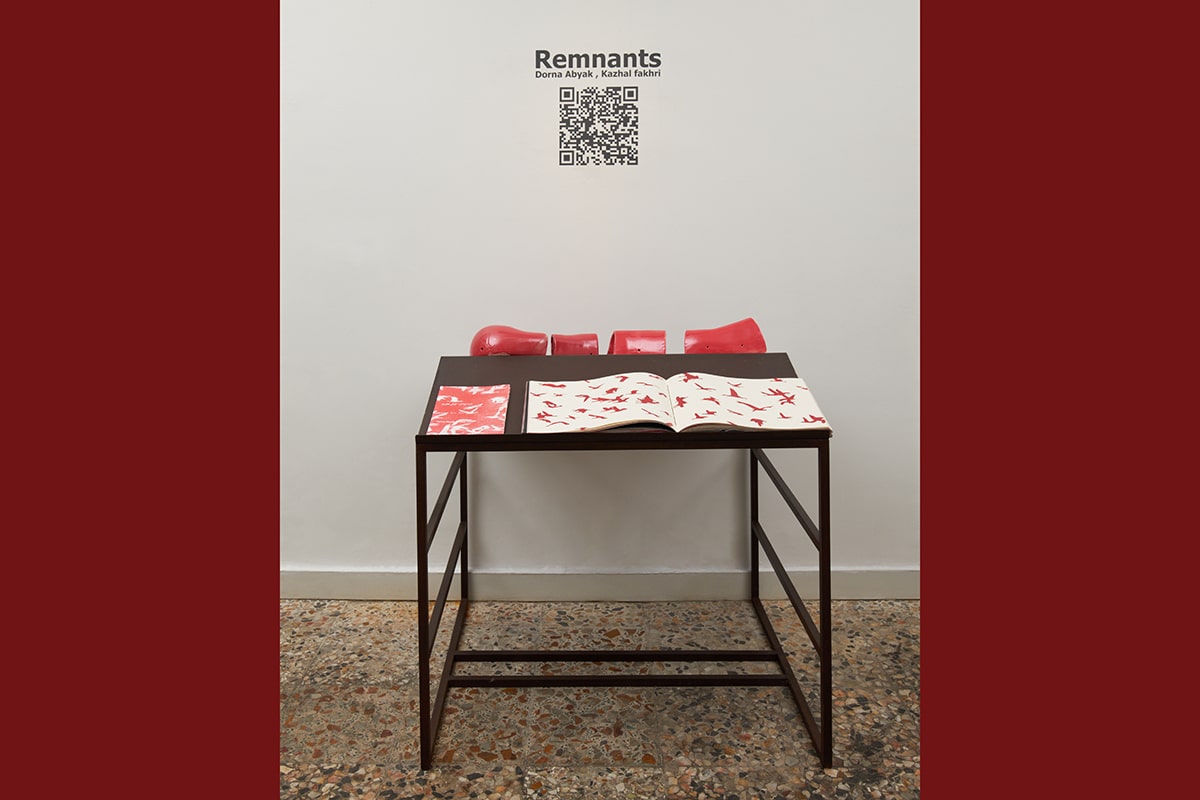
2024 / Homa Art Gallery
Shahrouz Nazari
Women artists have played an undeniable role in shaping contemporary and in particular conceptual art. Surprisingly, even more than men, women have used art as an effective weapon. During the past few decades, conceptual art has transcended its objective aspects to become a form of social and political activism, influencing countries like Iran. Kazhal and Dorna’s collaborative project fits in this category of response.
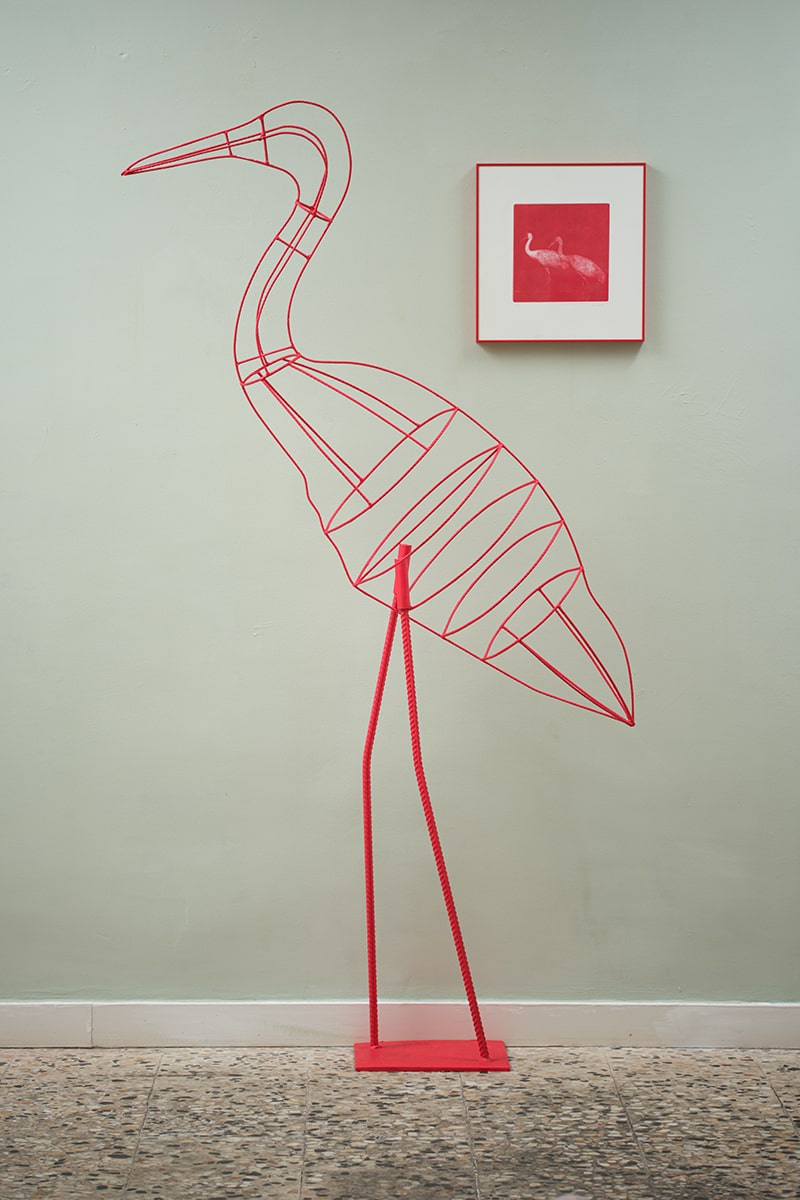
By considering the journey of an endangered species as a symbol, they not only address the environmental crisis happening on the shores of the Caspian Sea but also create an elegy about femininity, fragility, and deterioration. To them, the last Siberian crane serves as a metaphor for the bygone classical poetry as well as Iranian geoculture and ecosystem ruined by geopolitics and crazy economy.
In their installation, the body of the Siberian crane is analogous to the statue of Christ as the reflection of God manifested in the body of Jesus and the Trinity.
Anna Rita Fasano
President of Pandora Artists Ceramist Association
Dorna Abyak and Kazhal Fakhri are two contemporary and innovative artist and members of APS Pandora and part of the Ceramica Donna Project. Both participated last August in the prestigious Matres – International Festival of Women’s Ceramics in Cava de’ Tirreni, where they presented their works in exhibitions, receiving widespread acclaim.
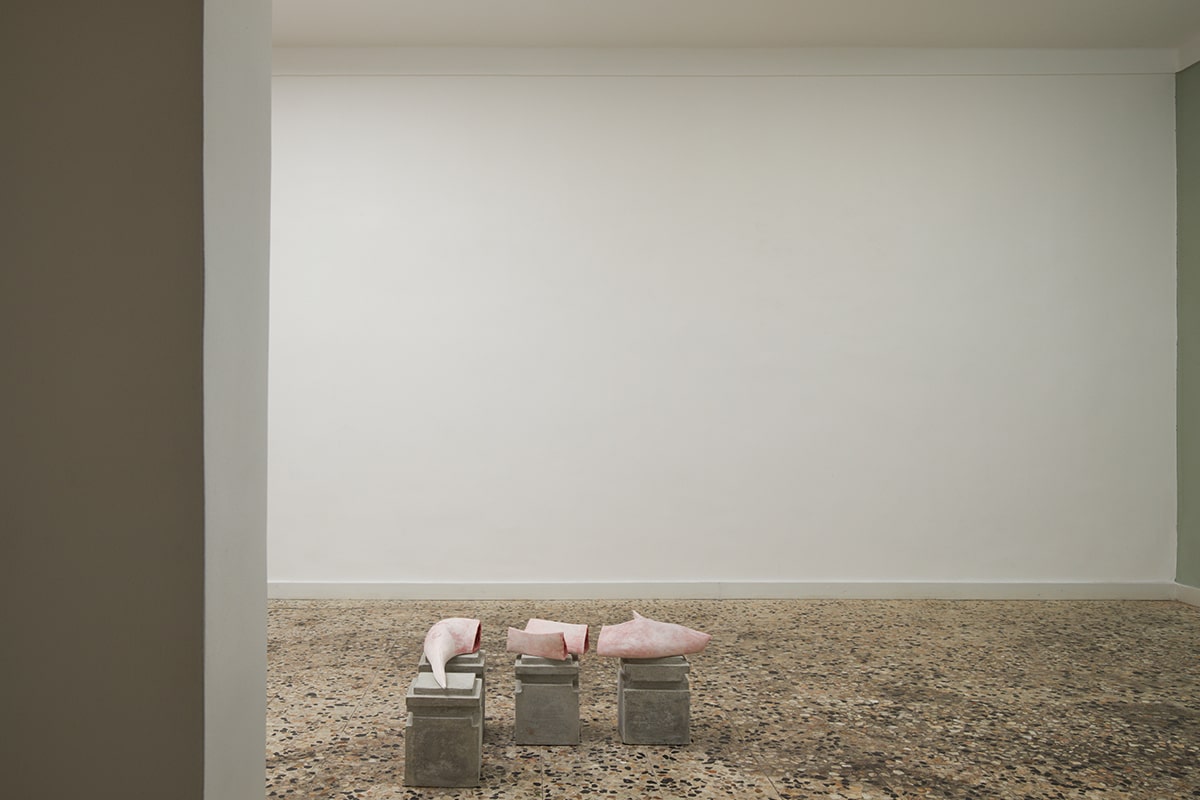
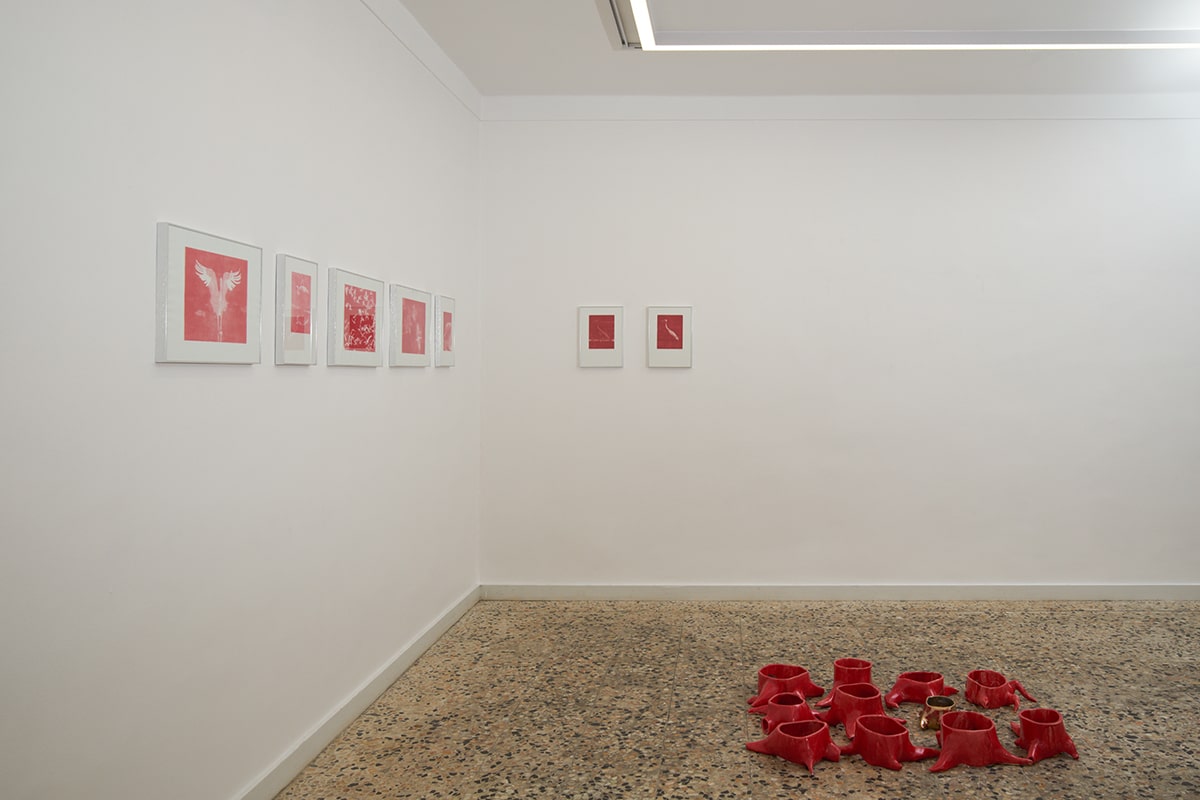
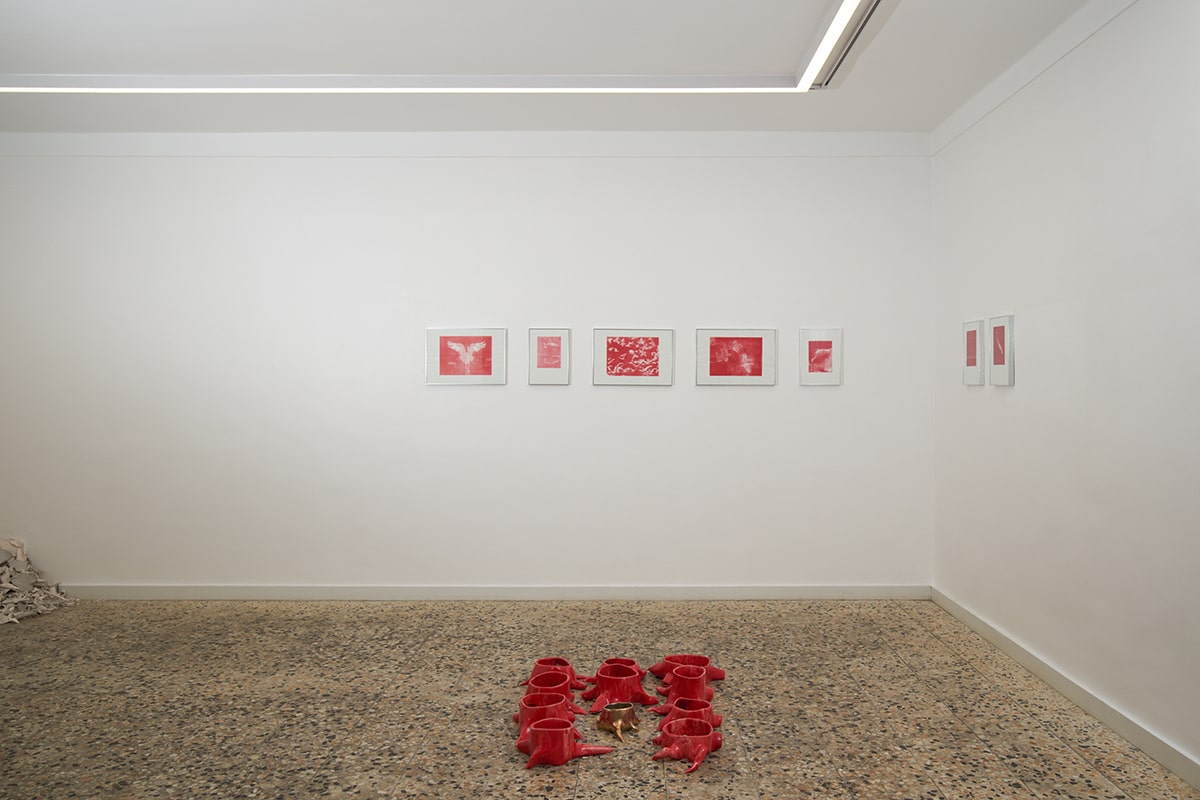
This exhibition brings the two artists together in a joint project that celebrates their love for the environment and nature. Starting from themes such as the mass death and extinction of birds, their works create a poetic dialogue between art and the environment. Dorna and Kazhal share not only a deep friendship but also an artistic vision that values acceptance, cooperation, and harmony between humans and nature. Through this exhibition, they present a universal narrative that invites reflection on global challenges and the profound connections between human experiences and the natural world.
The current pieces are symbolically intertwined through two powerful images: the roots sinking into the earth represent their love for their homeland, Iran, an unbreakable bond with their culture and history; while the flight of birds symbolizes freedom and the desire to overcome physical and mental boundaries. Together, these works give voice to a sentiment of belonging and universal aspiration.
Mana Yeganeh
President of Diako Art
In an age where the impact of humanity on the environment is undeniable, the urgency to redefine our relationship with nature has never been greater. While science and the media warn and analyze, art offers a different kind of dialogue—one that is reflective, poetic, and hopeful. It invites us to pause and reconsider how we coexist with the natural world and what legacy we wish to leave behind.
In this spirit, Dorna and Kazhal’s works breathe life into an urgent dialogue about our existence in the world. Through their art, they invite us to step into a space where the intertwined destinies of humanity and nature unfold. Their creations challenge us to contemplate the fragility of the earth, yet they also ignite a flicker of hope for its renewal. Together, they weave a narrative that transcends cultural divides, urging us to reimagine our place within the ever-changing world.
In their hands, art becomes more than an object—it awakens us to the deeper connections between us and the natural world. Their vision is one of harmony, where cooperation and mutual respect serve as the guiding forces. Through their collaboration, Dorna and Kazhal remind us of the delicate yet powerful interdependence of all living things, compelling us to reconsider the legacy we will leave for future generations.